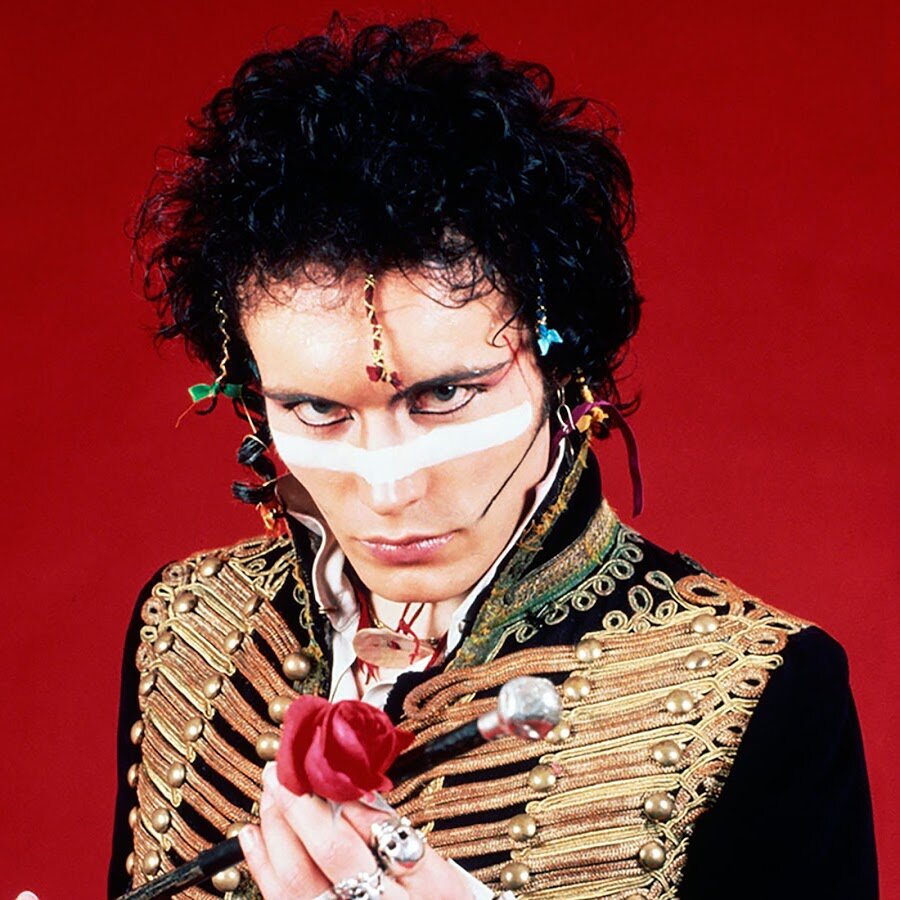
The coolness question is really the wrong question for Adam and the Ants – but it’s still relevant.
I went to see them live in London in 1981 and was blown away by a couple of things Adam wrote in the programme notes.
I can remember him saying he was a fan of Michael Jackson, which was a deeply, deeply uncool thing to say at the time – at least in my circles – and he also said that the original theme music for James Bond was a classic. No one – well at least no one I knew – was saying those things at the time. And as a matter of fact, that James Bond theme is a classic.
But for anyone who was interested in rock at that time to say such a thing (something from a mainstream movie?? With a sixties, orchestral feel???), was unheard of.
His main point, as I understood it, was: DON’T BE AFRAID OF NOT LOOKING COOL – just say what you actually like and feel. As his song, Prince Charming says: ridicule is nothing to be scared of.
For me, this brief bit of philosophy was immensely freeing – and mindblowing. It was saying, free yourself up to enjoy anything in the arts that gives you pleasure, and experience the positive joy in that. To hell with the mockers, the jeerers, the people obsessed with coolness. Adam’s was a contribution to pleasure, enjoyment, celebration and fun.
This was a revelation to me. And I had to agree: being afraid to admit you like something because others will jeer at you, is a very sad way to live. So the question about ‘cool’ doesn’t enter in with Adam and the Ants, and I do like them, 40 years later – especially their two hugely enjoyable albums, Kings of the Wild Frontier and Prince Charming.
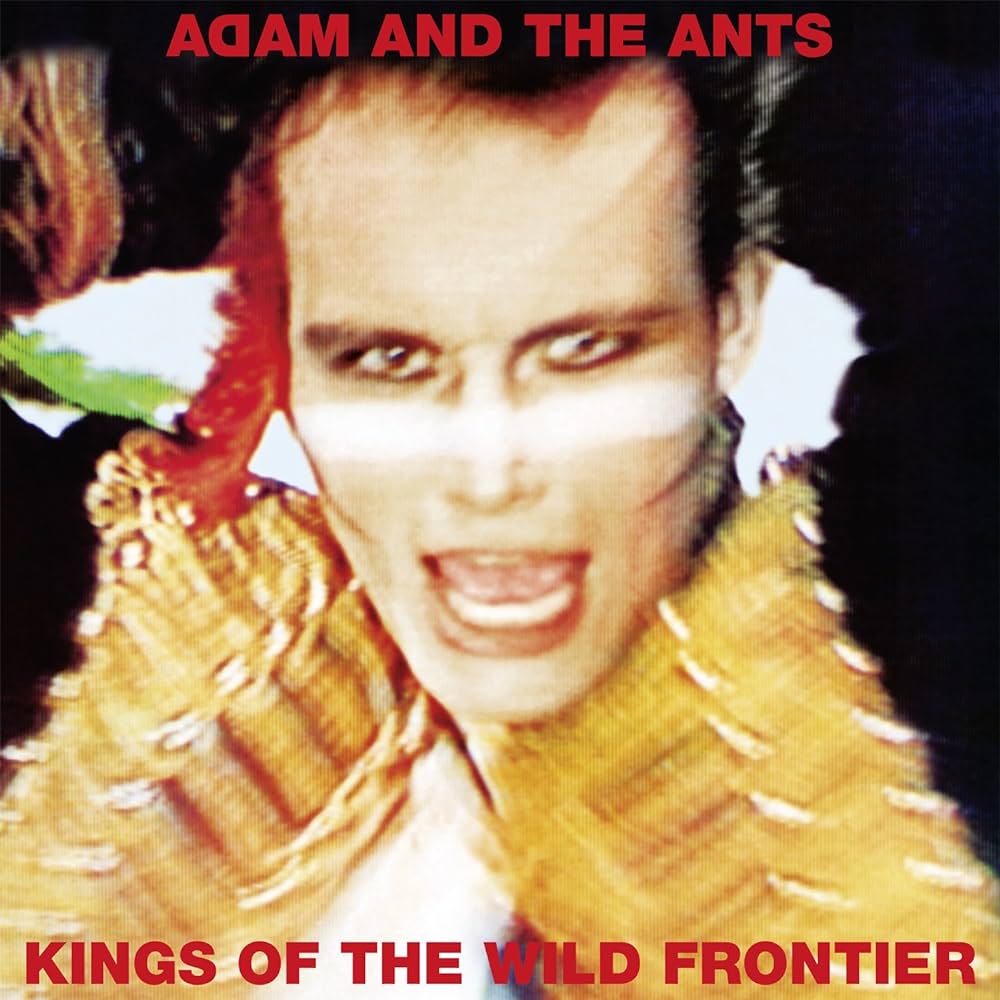
Not only that, but Adam also had what would now be called a “sex positive” philosophy: sexual attraction and pleasure are not something to feel shame about, though many do (I’ve certainly had my fill). The stance is: let’s see if we can change that and get rid of that shame, by celebrating who we are – the beauty of all of us – and intimacy. And at the same time, give respect and care to those who don’t want to, or choose not to participate in sex. This is summed up in his song S.E.X. from Prince Charming.
Let all the braggers brag
Sex, S.E.X
Virginity’s no crime
Sex, S.E.X
Your body should be yours
Sex, S.E.X
And sharing it sublime
Sex, S.E.X
I think this is a marvelous track. (here combined with previous track, Mowhok)
Originality
Which brings me to my second thought. What is artistic creativity and originality? It comes up a lot in the discussion of ChatGPT and so on.
My conclusion is that the ‘naïve’ view of originality is wrong. The naïve, romantic view I’d summarise as: “the artist creates out of her genius, in a flash of inspiration, bringing something totally new into existence. Originality is the bringing forth of something entirely fresh, and it comes out of a mysterious, never-to-be-described source of creativity that exists in its own space.”
Yes, I’ve taken the extreme expression of this view to make my argument clearer – people have all sorts of degrees of allegiance to the above.
What I argue is that originality, fairly obviously to me, does not come out of nothing. It is not a case of creating something entirely new. All the elements that constitute a work of art are, by necessity, pre-existing. The artist draws on these pre-existing elements to create a new work. No artist, and no person, can create something out of nothing, ex nihilo. (The same arguments apply pretty similarly to the traditional view of free will, which is vulnerable to the same objections.)
Instead, the artist takes all the things in her existence – her knowledge, skills, inclinations, past history, experience, genetic make-up, and so on – and combines these things in a new way, in a work that we conventionally describe as ‘original’.
This doesn’t preclude uniqueness, however. It is true that no human being has exactly the same experiences or inputs as anyone else, hence it is possible to create something unique. But this is not achieved by creating entirely new things out of a mysterious, undefinable creative space – out of nothing.
And the consequence of this view is that there is no reason why machine intelligence cannot be original – in the arts, or other spheres too. We all create out of the existing materials and apparatus that we have – and humans don’t escape those conditions. Humans do not produce original work by a miracle. They use and manipulate existing conditions and materials. So can an intelligent machine.
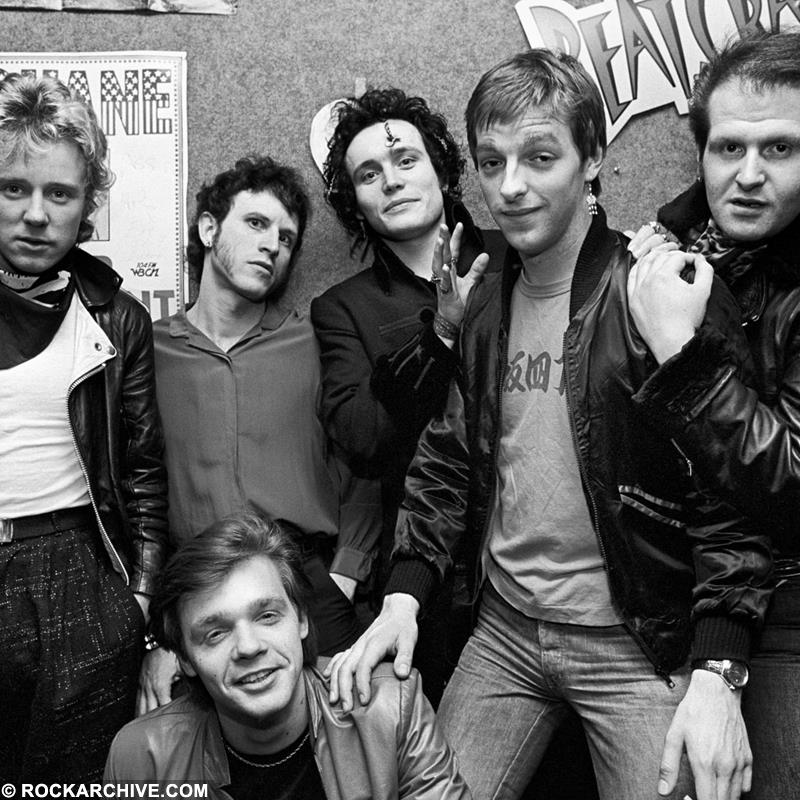
Adam and the Ants are a marvelous example of this. In my opinion they have a unique sound. I have never heard anything exactly like it. How did they do it? Well, if you read around a bit, and just listen, it’s clear that they drew on a variety of sources and sounds – and combined them into their own unique mix.
Here’s a list of some of the pre-existing elements:
- Burundi-style drumming (Adam reportedly heard records with this kind of drumming from that country)
- Native American style chanting and vocalisations
- Spaghetti Westerns
- Insect like drumming sounds – tied in with the multiple references in the lyrics to ants, ant invasions, ant-music etc
- The British pantomime tradition – evidenced in much of the garb worn by the band, but also in song references and sounds and rhythms
- 18th Century English fashion (Adam had worked in Vivienne Westwood’s store on King’s Road where some of her collections reflected this) – in their on-stage garb, but also in the proud declamatory style etc
- Latino music – in some of the brass arrangements and rhythms, as well as lyrics
- New wave guitar sounds
- English vaudeville – some of the melodies and arrangements
- Funk-fusion bass lines
- Glam rock
That’s quite a mix, and it’s not exhaustive – and you can hear it in many tracks:
Respect
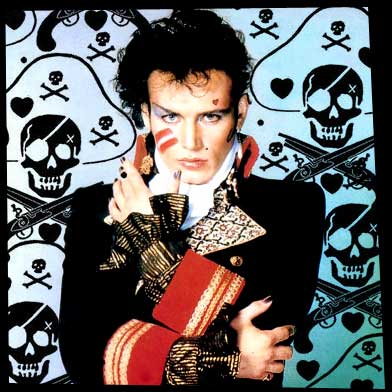
So Adam and the Ants definitely produced something new, and unique, but it absolutely wasn’t ex nihilo. It was created from a rich seam of sources. The band derived everything from what they already knew, and combined it into the new songs.
Not only was Adam adept at expressing fun and joy, he was also, as far as I can see, very serious about some of his subjects. The Native American genocide features in several of his songs, for example. That’s an unusual subject for youth music. Sometimes the themes are a complex mix:
The Native American theme was reportedly of interest to Adam because of his own Romani (or Roma) ancestry, through his maternal grandfather: an oppressed ethnic group that originated in the Indian subcontinent.
The songs are a mixture of the old, the new, the serious and the non-serious. Incidentally, since he’s about my age, I’m sure Adam must have watched the 60s television series Adam Adamant – about an adventurer who is accidently transported to swinging sixties London from the nineteenth century. Was that another source of his ideas about melding different eras? Quite possibly.
The pity about Adam and the Ants is that they were very short-lived. Their creative period and popularity lasted for about 2 years and was then suddenly snuffed out when Adam disbanded the group. Adam has had ongoing mental health issues, and has been diagnosed as bipolar, which might explain the short-lived fragility of this project.
One other thing – I have my younger siblings Joe (10 years younger) and Rosy (14 years younger) to thank for my interest. They were into “Stand and Deliver” – both the song and the video – which was at number one. I didn’t like it, but they had the album Kings of the Wild Frontier and wanted to play it. I thought “this is going to be awful” but stayed to listen. After about two minutes I was hooked.
Incidentally, they were a great live band: two sets of drummers beating out those Burundi drums, pantomime stage sets and period costumes and Adam’s electric presence. They really put on a show – much more common these days, but unusual in the early 80s.
One more positive point. In an interview he was asked about Nietzsche for some reason, and he answered that he’d tried reading his work, but couldn’t understand it. Complete honesty and no pretensions whatever. That I find extremely refreshing. I’ve tried reading Nietzsche myself and failed to get beyond one or two pages, faced with hundreds more pages of turgid, obscure, unreadable prose. From commentaries, my message to Adam is that his ideas are so preposterous, stupid and bad that he’s not worth reading in the first place. But that, of course, is very much a second-hand opinion.
Anyway, I don’t say Adam and the Ants were cool, or that I am cool or not cool for liking them. I simply like them and enjoy their songs – and I still cherish some of Adam’s insights and opinions.
 francismead.com
Leave a comment