So I recently watched the following three movies: Oppenheimer, Barbie and Everything, Everywhere all at Once. Full disclosure: I didn’t think the films were very good for the most part, though all had good elements in them. I have my reasons.
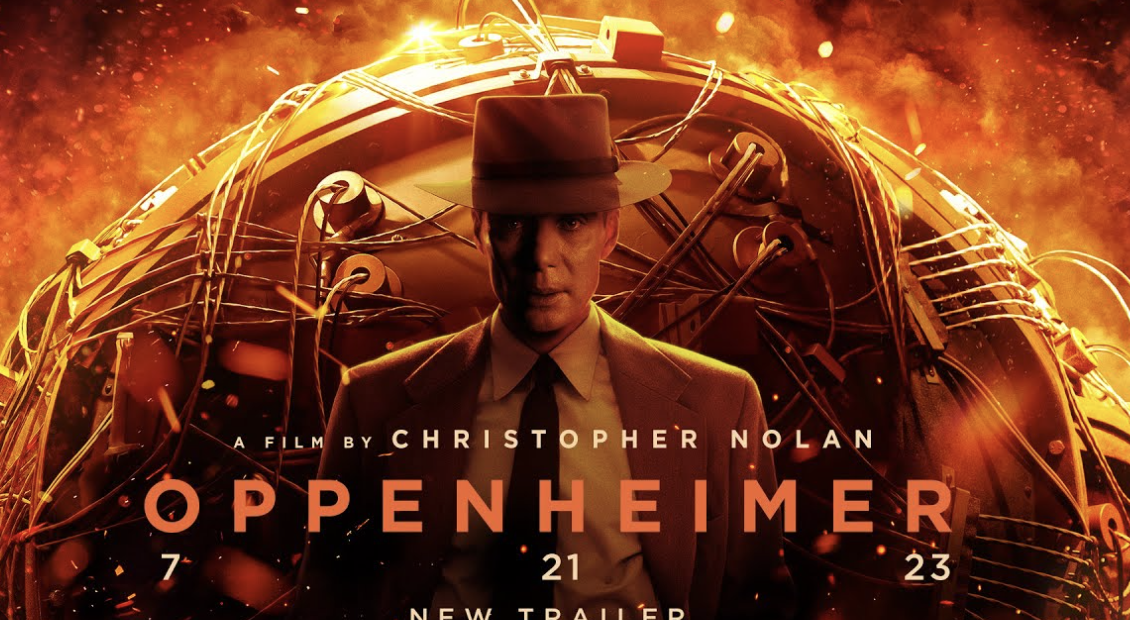
Personal background: I did not have a Barbie or a Ken, so had no base of interest in that subject. I am very interested in the history and physics around nuclear weapons, so that was my baseline for Oppenheimer, and thirdly, I’m not very interested in using theories like multiple universes to base a plot around – which seems a very corny idea. So that was my baseline for Everything etc.
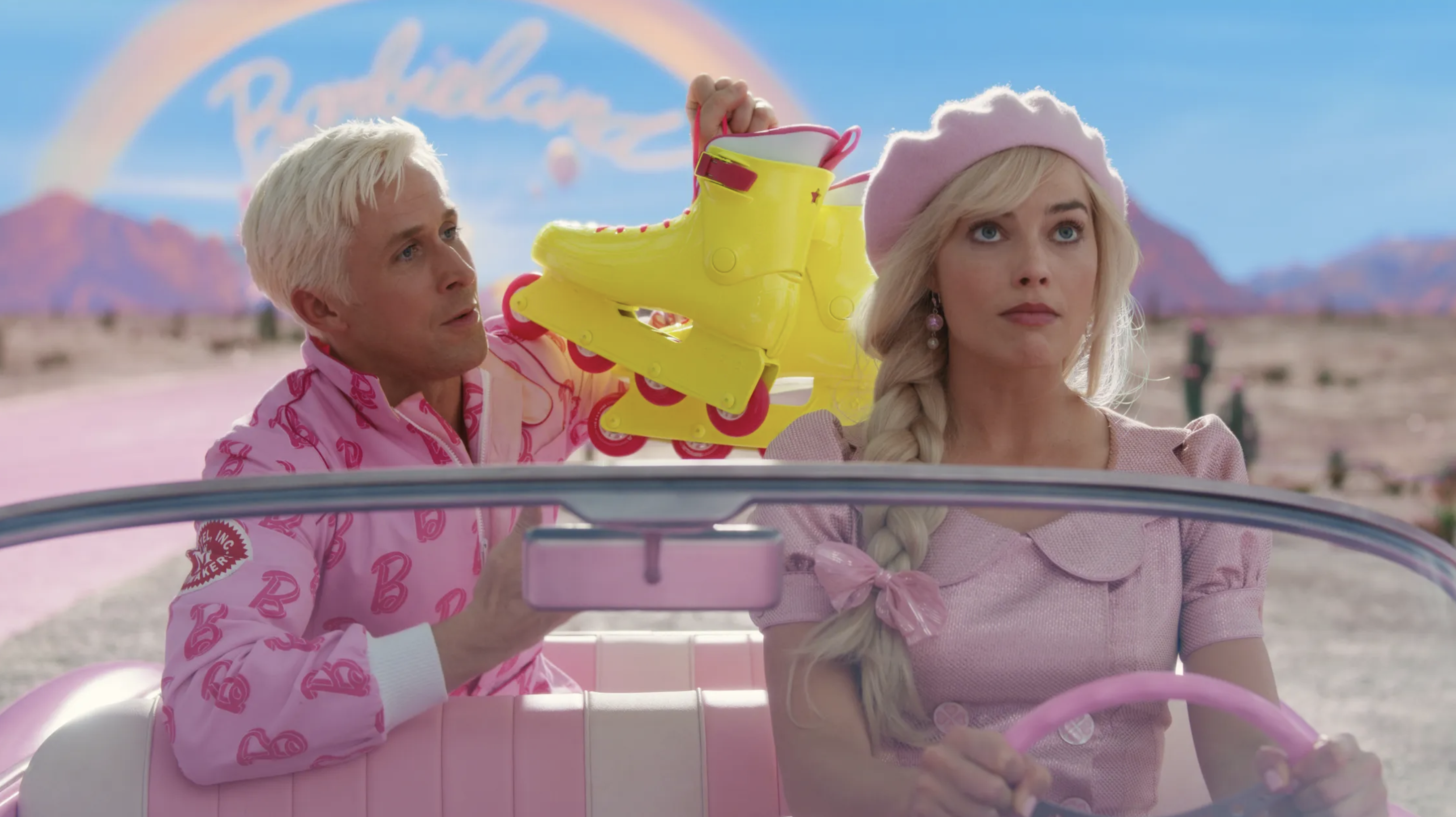
But I noticed something in common with all three films – and am wondering if this is a new trend. (No, let’s be honest, I’m sure it is)

Below are two script examples from each film to illustrate my conclusions. I chose them semi-randomly, and I could have chosen many other examples. I’ll put down my thoughts after the extracts.
Oppenheimer:
1)
LAWRENCE You shouldn’t let them bring their politics into the classroom…
I follow his look: “SATURDAY 2:00pm, RALLY FOR LOYALIST SPAIN”.
OPPENHEIMER I wrote that. Lawrence, you embrace the revolution in physics, can’t you see it everywhere else? Picasso, Stravinsky, Freud, Marx…
LAWRENCE This is America, Oppie. We had our revolution. Seriously, keep it out of the lab.
2)
RABI You drop a bomb and it falls on the just and the unjust. I don’t wish the culmination of three centuries of physics to be a weapon of mass destruction.
OPPENHEIMER Izzy, I don’t know if we can be trusted with such a weapon, but I know the Nazis can’t. We have no choice.
RABI Well, the second thing you have to do is appoint Hans Bethe to head the Theoretical division.
OPPENHEIMER Wait, what was the first?
RABI Take off that ridiculous uniform- you’re a scientist.
Barbie:
1)
(Barbie and various other characters speaking)
In our assessment, money is not speech, and corporations have no free speech rights to begin with.
So any claim on their part to be exercising a right is just their attempt to turn our democracy into a plutocracy.
[all applauding]
This makes me emotional, and I’m expressing it.
I have no difficulty holding both logic and feeling at the same time.
And it does not diminish my powers.
It expands them.
2)
I thought that Barbie had made the Real World better, but the Real World is forever and irrevocably messed up!
Well, the Real World is not perfect, but you inspired me.
I love women. I want to help women.
Oh, come off it, everybody hates women.
Women hate women, and men hate women.
It’s the one thing we can all agree on.
Is that true?
It’s complicated.
Hate is a strong word.
Everything, everywhere, all at once:
1)
INT. JANITOR’S CLOSET:
WINONA They do not know I’m talking to you here yet, so hopefully I’ll have time to explain: I am not your wife. At least not the one you know. I am another version of her from another life path, another universe. I’m here because we need your help.
JACKIE What the hell?
Winona covers Jackie’s mouth.
WINONA There is a great evil that has taken root in my world and has begun spreading its chaos throughout the many verses. I have spent years searching for the one who might be able to match this great evil with an even greater good and bring order back to the multiverse. All those years of searching have brought me here. To this universe. To you.
2)
INT. IRS 10TH FLOOR
Jackie shakes the leak and approaches Jobu.
ALPHAWINONA What are you doing?
JACKIE I am going to talk some sense into my daughter.
ALPHAWINONA Jackie, she can’t be reasoned with.
Jackie has an idea.
JACKIE Then I’ll verse jump. Somewhere where I am very very good at talking. And I will touch my daughter’s heart. And then maybe she will no longer be an evil gay.

My point of view
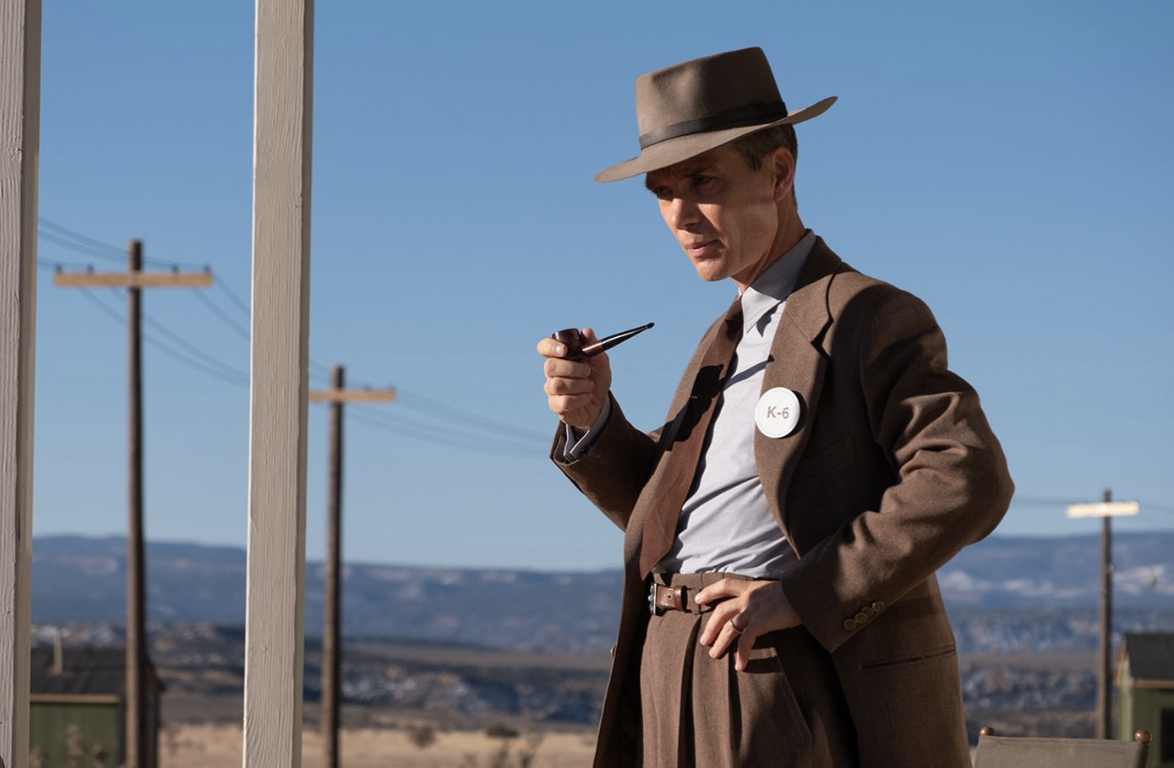
The thing I’ve noticed with all three films is that there is a frantic level of explaining in much of the dialogue. Oppenheimer the character is continually naming other physicists, announcing his next bit of crucial work, explaining the politics, explaining the latest scientific development.
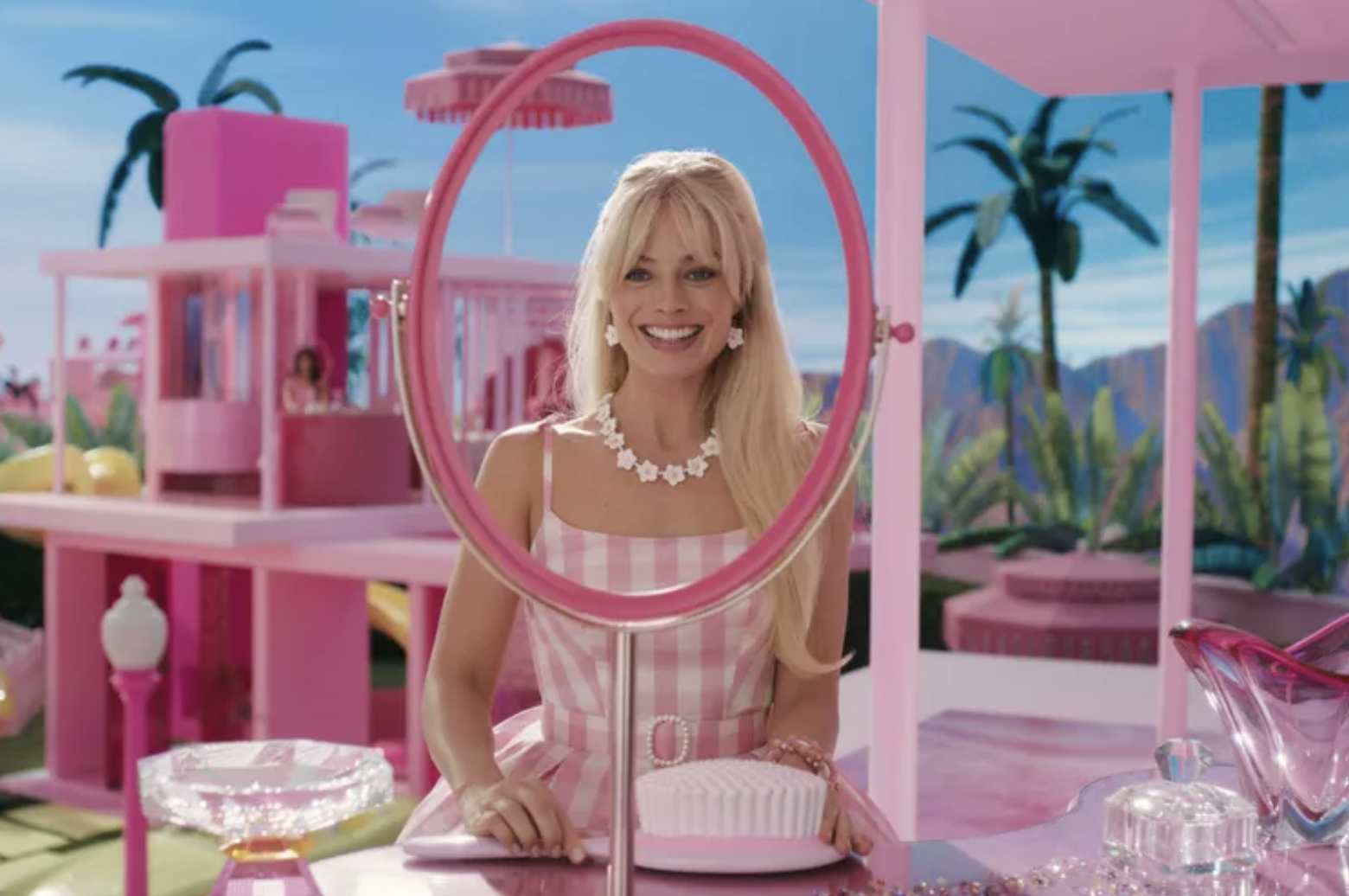
Barbie the character is constantly announcing her thoughts on various issues, from the meaning of life, to gender relations, to her precise feelings at a particular moment etc etc – as do pretty much all the other characters, including a narrator. Everything is announced and explained.
And in Everywhere the main characters are constantly explaining what’s happening – explaining that they are switching to some such other universe and why, and so on.
As an unoriginal thought, I’m wondering if this is influenced by social media – TikTok, Instagram, YouTube – where the main and most popular tropes are the “how to” video; the narration of an event or daily activities; or a protagonist provides a constant stream of commentary and explanation on her feelings and reactions. Has this leaked into mainstream movies? It looks like it has.
What interests me about this is that it is in complete contradiction to the traditional tenets of film-making – essentially that you “show” and you don’t “tell”. In this tradition, characters’ emotions and thoughts are revealed by behaviour, or leaked out in conversations, often obliquely. To write dialogue that is “on the nose” – ie saying and describing exactly what is going on and what is at stake – is generally frowned upon in this tradition.
Long story short, I still mostly believe and adhere to this older tradition. Its strength is that it builds connection with characters on an emotional and psychological level. We are not told what to think or feel – and movies that do so seem clunky, ineffective and not engaging.
All three of the above films completely go against the established tradition – and, in my personal opinion, this is largely to their detriment. I am not engaged on an emotional and psychological level, since I am constantly being told, being explained to, spoon-fed on what is going on, what the characters are thinking and what is happening.
In the older tradition, with a good movie, we come to intuit what is happening partly by simply watching the actions and expressions of the actors. And then the oblique dialogue seeps into us, as viewers, in an organic way, almost without us realizing it. We are not spoon-fed.
Each movie above frantically wants to convey a very large amount of information to us – about every political and societal aspect of Barbie dolls, about every detail of the history and science around the first atomic bomb, about every small twist in the plot as we switch between parts of the multiverse.
To some extent, paradoxically, this saves the Oppenheimer movie. I was really only interested to the extent that it told me significant factoids about the history of this extraordinary period. I didn’t find the characters at all relatable – since the dialogue is split up into frantic bits and pieces. The film, very obviously to me, attempts to cover far too much ground and unfortunately makes poor choices about what ground to cover.
There is a huge (HUGE!) segment on Oppenheimer’s security clearance hearing and the case of Admiral Strauss. I think the hearing against Oppie could have been handled in about three or four shortish and powerful scenes. Instead, we get something like an hour and a half (!) on this. Secondly, the story about Strauss is completely uninteresting. Who cares about Strauss – apparently a devious politician? Why should we be interested in this when we have the history of the first atomic bomb ffs!
With Everywhere, there really is a massive amount of visual imagination poured into this long movie. The visuals are well done – but for me, the film consists almost entirely of set pieces with effects. Where’s the real story?
The lead actor, Michelle Yeoh, is good, but what does she have to play with? A lot of frantic fragments, endless comic-book confrontations. It’s very samey, and very endless. And when it does try to paint some human emotion on to the relationships at the end, it’s way too late and not, for me, at all convincing.
99% of the effort went into the visual scene making. I guess that’s also par for the course these days. There are an awful lot of films that are essentially comic-book set scenes, with very, very little good character development, and very little effective story-telling. Where’s a plot that we can take seriously on a human level and care about?
With Barbie, by the end of the film I did modify my thoughts. But for me, the first hour and fifteen minutes were utter dross – boring, flat, unfunny, nowhere near as clever as it thought it was, no developed characters, no real emotion, no time for real story development. Very un-deft – just badly written. And again, all the characters are constantly explaining to us what they are doing – explaining, explaining, explaining. Exposition, exposition, exposition. And no story, in the sense of some plot development that we can be remotely interested in.
(Note: the fact that it is of course a spoof does not let it off the hook. The thing is, if you do a spoof, whether it be in a film or a novel or a painting, the spoof has to be a GOOD spoof – ie it still must be entertaining and interesting. A bad spoof is what it says – it’s bad, not entertaining or engaging. The reader or viewer has to be entertained enough to watch or read through it – bad is bad.)
In my opinion the last 30 minutes of the movie redeem it somewhat. It’s interesting that this segment, the only segment that actually engaged and entertained me, begins with a much longer scene with a lead female describing the impossible and contradictory demands placed on women in society. It’s still didactic – still telling us rather than showing us – but at least, this time it is done in a more engaging, psychologically convincing way. The actor is given time and space to develop herself as a presence on screen, something that is entirely lacking in most of the three films.
Suddenly, I was taking notice, and, after this, with this human bridge created, even the set scenes became more amusing and engaging. The fake war between the men actually made me smile for the first time, as did their dance routine. Ken is able to speak a little more – again he is given more time and behold, the film had my attention. It still ended in a rather flat way, too didactic once again, but the film wasn’t quite as bad as I thought it was going to be overall.
I am of course interested and curious why the film Barbie is so popular with many people. I wonder if part of it is the same reason I tolerated Oppenheimer even though I didn’t think it was a good movie: that there is a core interest in the subject. Millions of people have had Barbies, and it’s an interesting subject to consider for them. ie what was the effect of Barbie? – was it empowering, disempowering, a mix of the two – or what? And yes, the movie addresses these issues. But again, simply addressing an issue doesn’t make it a good movie. You can address the most interesting, most worthy, most important subject in the world, but if you do it in a ham-fisted, poorly crafted way, it’s still a bad movie. You don’t get brownie points just because you refer to something significant. You have to do it well.
Conclusions
All of which seems to confirm me in my prior prejudice – I still think movies are more powerful, more effective when they are not didactic, when they don’t explain AT you all the time, when they give time to the actors to act and become more fully developed human beings in front of our eyes, and when they don’t constantly try to ram too much information down our throats.
Good films in the traditional genre are very selective in what they show and portray as stories. Crucially, they know what to leave out, and what is essential, and they take their time to build their power.
I hope this tradition doesn’t end – and no, I don’t want to watch any more three-hour TikTok movies.
PS.
Article in the Guardian on this subject – makes an interesting case – is it because shows and movies are being watched by distracted people on their phones that they are deliberately explaining things over and over again to these half-concentrating viewers – definitely some plausibility to this. Extract: “Making something that you know will be primarily watched on Netflix, on the other hand, means resigning yourself to a lack of concentration. Maybe the lights are on. Maybe you’re watching it in chunks. Maybe your kids won’t shut up. Damon told Rogan that the streamer asks film-makers to dumb things down a little, adding a big action set piece early on to keep viewers interested, and advising them that: “It wouldn’t be terrible if you reiterated the plot three or four times in the dialogue because people are on their phones while they’re watching.” Describing this, Damon added: “It’s going to really start to infringe on how we’re telling these stories.”… Netflix is also in possession of a colossal amount of granular viewing data. It knows what we watch, why we watch it and how long we watch it for. And this is plain, concrete data that doesn’t deign to flatter us with highbrow assumptions. It has looked into its crystal ball and seen that we’re all just a bunch of slack-jawed apes who watch things with one hand gripping our phones and the other shoved down the front of our trousers. In other words, if Netflix says that we need to have the plot explained to us over and over again, it’s because it has run the numbers and knows that we do.”
 francismead.com
Leave a comment